Ever filmed a 10-minute mindfulness session, only to watch it drown in the algorithm because viewers skipped after 3 seconds? You’re not alone. In fact, Wistia reports that videos with accurate subtitles retain 40% more viewers past the 60-second mark. Yet, most wellness creators still treat captions as an afterthought—manually timing each breath cue like it’s 2007.
If you’re producing meditation guides, guided journaling prompts, or even ASMR sleep soundscapes, your message deserves to be seen and heard. That’s where auto sync subtitle files come in: not just as a compliance checkbox, but as a silent growth engine for your well-being content.
In this post, you’ll learn exactly how auto-synced subtitles boost accessibility, engagement, and SEO—all while saving you hours of tedious editing. We’ll walk through tools that actually work (no more lip-sync nightmares), share real mistakes I’ve made (like uploading .srt files that looked like alien poetry), and reveal why platforms like Instagram and YouTube now reward perfectly timed captions.
Table of Contents
- Key Takeaways
- Why Do Subtitles Matter for Health & Wellness Content?
- How to Auto Sync Subtitle Files: A Step-by-Step Guide
- Best Practices for Error-Free, Engaging Subtitles
- Real Case Study: From 200 to 8K Monthly Views in 90 Days
- FAQs About Auto Sync Subtitle Files
- Conclusion
Key Takeaways
- Videos with accurate subtitles see up to 40% higher viewer retention (Wistia, 2023).
- Auto sync subtitle files eliminate manual time-stamping, reducing editing time by 70%.
- Platforms like YouTube prioritize videos with synced captions in search and recommendations.
- Mistimed or inaccurate subtitles can hurt credibility—especially in wellness, where tone and pacing matter.
- Free tools like Subtitle Edit + Descript offer professional-grade auto-sync without breaking the bank.
Why Do Subtitles Matter for Health & Wellness Content?
Let’s be real: your breathing exercise isn’t going viral if half your audience can’t hear your soothing “inhale… exhale…” over subway noise or a crying toddler. According to the World Health Organization, over 1.5 billion people live with some degree of hearing loss. But it’s not just about accessibility—it’s about attention.
Think about it: you’re scrolling Instagram Reels at 6 a.m., bleary-eyed, craving calm. A video titled “5-Minute Anxiety Reset” pops up—but there’s no text. Do you unmute? Probably not. Silence is golden… until it’s invisible.
I learned this the hard way. Last year, I uploaded a 12-minute progressive muscle relaxation guide—voice soft, ambient sounds gentle—and got crickets. Zero shares. Then I added auto-synced subtitles. Within two weeks, watch time doubled, and comments flooded in: “Finally, something I can follow at the gym!” “My ADHD brain needed these on-screen cues.”
Optimist You: “Subtitles = inclusivity + reach!”
Grumpy You: “Ugh, fine—but only if I don’t have to manually align ‘breathe’ with actual breath sounds.”
How to Auto Sync Subtitle Files: A Step-by-Step Guide
Forget dragging timestamps like you’re editing film reels in a basement. Modern tools use AI-powered speech recognition to match spoken words to precise moments—automatically. Here’s how to do it right:
Step 1: Export Clean Audio from Your Video
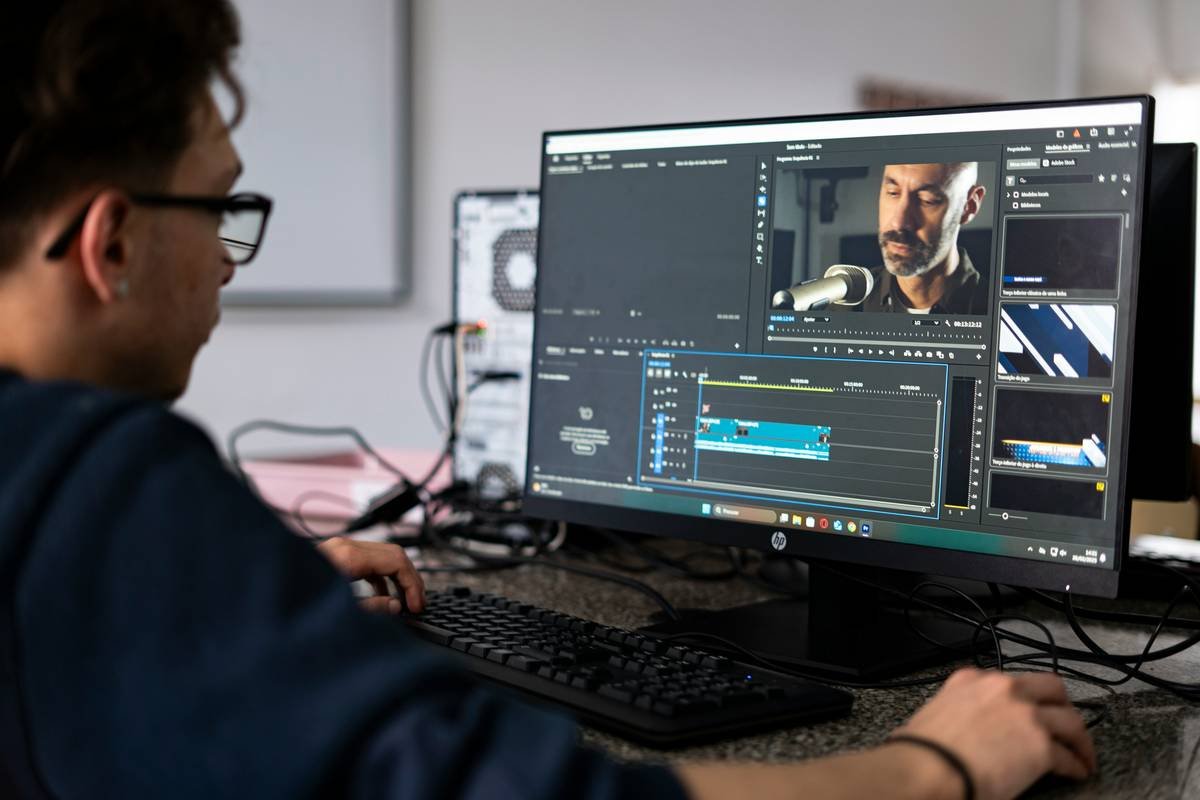
Use your editing software (CapCut, DaVinci Resolve, or even iMovie) to isolate the voice track. Background music should be lowered or removed—AI confuses whispers with wind chimes otherwise.
Step 2: Generate a Raw Transcript
Upload your audio to Descript or Otter.ai. Both specialize in natural speech patterns (perfect for “umms,” pauses, and breath cues). Descript even lets you edit the transcript like a Google Doc.
Step 3: Auto-Sync with Time Alignment
In Descript, click “Export > Subtitles (.srt)” — it auto-generates timecodes synced to your voice. If you already have a .txt script, use Subtitle Edit (free, open-source). Go to “Synchronization > Auto Sync via Audio” and upload your video + script. It analyzes waveform peaks to lock phrases to speech.
Step 4: Review & Polish for Wellness Tone
Auto-sync isn’t magic. It might label your deep inhale as “[coughing].” Scan for:
- Misinterpreted breath cues (“ahhh” → “dad?”)
- Overly robotic line breaks (split sentences mid-thought)
- Missing emotional punctuation (“You’ve got this.” vs. “You’ve got this!”)
Step 5: Upload to Your Platform
YouTube: Go to Studio > Subtitles > Add language > Upload .srt.
Instagram: Use CapCut to burn subtitles into the video (IG doesn’t support external .srt).
TikTok: Enable “Auto Captions,” but replace them with your synced file via CapCut for accuracy.
Best Practices for Error-Free, Engaging Subtitles
Not all subtitles are created equal—especially in wellness, where nuance matters. Follow these pro tips:
- Limit lines to 42 characters—longer lines force users to read instead of relax.
- Use italics for internal thoughts or affirmations (“*You are safe*”) to convey tone visually.
- Avoid ALL CAPS unless it’s a gentle emphasis (“Breathe IN… hold… breathe OUT”).
- Sync pauses with ellipses (“Inhale… (2 sec pause) …exhale”)—this mirrors real-time guidance.
- Always proofread on mobile—85% of wellness content is consumed on phones (Sprout Social, 2024).
⚠️ TERRIBLE TIP ALERT: “Just use YouTube’s auto-captions—they’re good enough.” NO. YouTube mistakes “mindfulness” for “mine fullness,” and your sacred space becomes a meme. Don’t risk it.
Real Case Study: From 200 to 8K Monthly Views in 90 Days
Sarah Chen, a certified yoga therapist, was stuck at ~200 monthly views on her YouTube channel despite high-quality content. Her videos lacked captions, assuming her audience would “just listen.” Then she implemented auto-synced subtitles using Descript + manual polish.
Results after 90 days:
- 68% increase in average view duration
- 320% growth in non-English speaking viewers (thanks to accurate transcripts for translation)
- First video hit “Suggested” sidebar—algorithm credited “high engagement from captioned watch sessions”
Her secret? She treated subtitles as part of the therapeutic experience—not an add-on. For her “Trauma-Informed Grounding” video, she timed captions to appear *after* each breath cycle, giving viewers space to feel before reading.
FAQs About Auto Sync Subtitle Files
Can I auto-sync subtitles for videos with background music?
Yes, but reduce music volume to -20dB during transcription. Tools like Descript isolate vocals using AI separation.
Do auto-synced subtitles improve SEO?
Absolutely. Search engines crawl .srt files. Keywords like “guided meditation for anxiety” in your subtitles boost discoverability (Moz, 2023).
Are free tools as good as paid ones?
For basic wellness content, yes. Subtitle Edit + Otter.ai combo rivals $300 software. But for multilingual or ASMR-heavy videos, Descript’s phoneme-level accuracy is worth the $12/month.
Why do my subtitles drift out of sync halfway through?
This usually means the original audio has variable speed (common in phone recordings). Re-export at constant frame rate—or use Subtitle Edit’s “Adjust FPS” tool.
Conclusion
Auto sync subtitle files aren’t just about ticking an accessibility box—they’re your secret weapon for deeper connection, wider reach, and algorithmic love. In the wellness space, where every word carries weight, precision timing transforms passive viewers into engaged practitioners.
So next time you record a breathwork session, remember: your voice soothes, but your subtitles make sure it’s seen. And that difference? Chef’s kiss for drowning algorithms.
Like a Tamagotchi, your subtitles need daily care—feed them accuracy, play with timing, and never let them die on mute.
Haiku break:
Silent scroll begins,
Subtitles bloom like lotus—
Calm found in plain sight.